
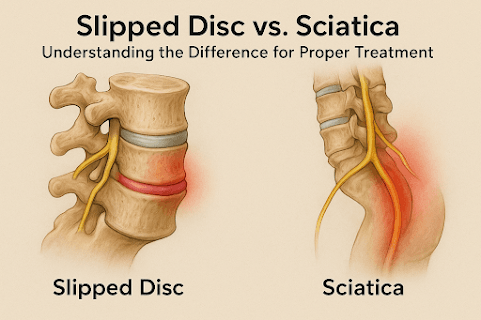
When back pain strikes, it can be challenging to determine whether it’s a slipped disc or sciatica. Though these conditions are closely related, understanding the difference is essential for accurate diagnosis and treatment. Let’s explore their causes, symptoms, and modern treatment options.
What Is a Slipped Disc?
A slipped disc, also called a herniated disc, occurs when the soft cushion between the spinal bones bulges or ruptures. This disc material presses on nearby nerves, causing pain and discomfort. Common causes include heavy lifting, poor posture, or spinal degeneration.
Symptoms of a Slipped Disc:
- Sharp or burning pain in the lower back or neck
- Numbness or tingling in the limbs
- Weakness in the muscles of the legs or arms
- Pain that worsens with movement
What Is Sciatica?
Sciatica refers to pain radiating along the sciatic nerve, which extends from the lower back down to the legs. It’s not a condition by itself but a symptom of nerve compression, often due to a slipped disc or spinal stenosis.
Key Symptoms of Sciatica:
- Shooting pain from the back to the foot
- Burning or tingling sensation in one leg
- Difficulty standing or walking for long periods
- Pain that worsens when sitting
How to Tell the Difference
While both cause nerve pain, the slipped disc is a structural problem, whereas sciatica is a symptom of nerve irritation. A slipped disc can cause sciatica, but not all sciatica cases result from a disc issue.
Diagnostic Methods:
- MRI or CT scan to detect disc herniation
- Neurological examination
- Electromyography (EMG) to check nerve function
Treatment Options for Slipped Disc and Sciatica
1. Non-Surgical Treatments
- Physical therapy for spine alignment
- Pain medications and anti-inflammatories
- Epidural steroid injections
- Lifestyle changes and posture correction
2. Surgical Options
When conservative measures fail, spine surgery may be necessary to remove or repair the herniated disc and decompress the affected nerve.
Related keyword: minimally invasive spine surgery.
Prevention and Posture Tips
Maintaining a healthy spine can prevent both conditions.
- Practice correct lifting techniques
- Strengthen core and back muscles
- Maintain a healthy weight
- Avoid sitting for prolonged periods
Related keyword: spine health exercises.
When to See a Specialist
If your back or leg pain persists beyond a few weeks or is accompanied by numbness, weakness, or loss of bladder control, consult a spine expert immediately.
Related keyword: back pain specialist.
For expert diagnosis and personalized care, consult our
Dr. Sreenath Rao Jakinapally — Best Spine Surgeon in Hyderabad.
Conclusion
A slipped disc and sciatica may feel similar but differ in cause and treatment. Early diagnosis and expert care are crucial for pain relief and spinal recovery. Always seek professional guidance.
Recent Comments