
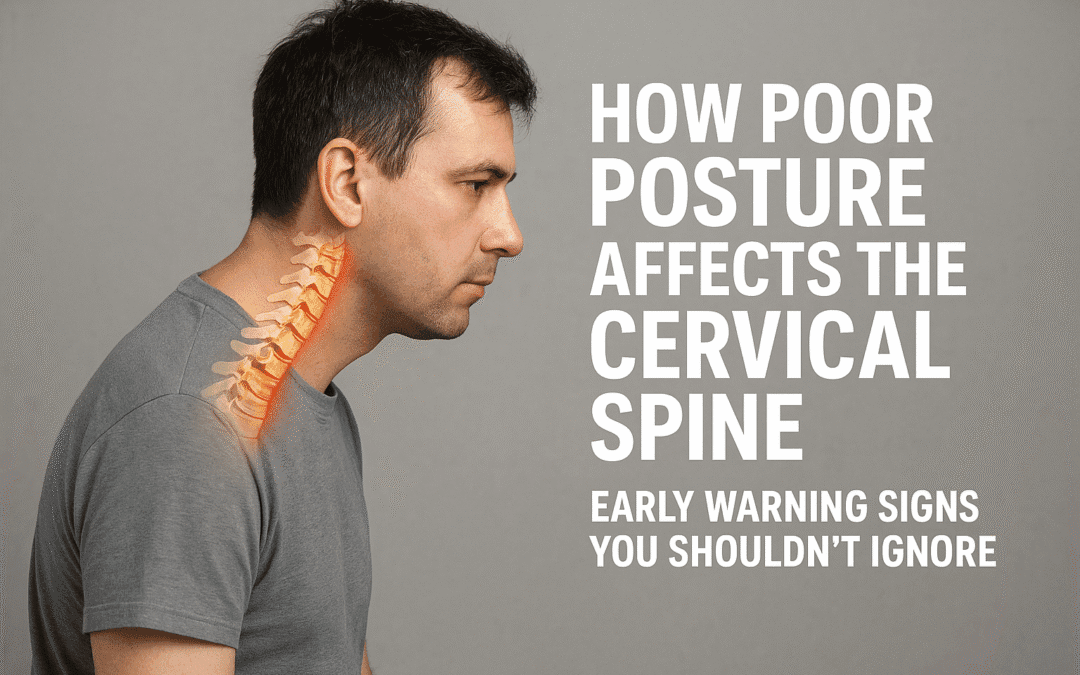
Poor posture has become increasingly common due to long working hours, smartphone use, and sedentary habits. When the alignment of your neck is disturbed, the cervical spine undergoes constant strain, leading to early symptoms that many people overlook.
Understanding the Cervical Spine
The cervical spine consists of seven vertebrae responsible for supporting the head, protecting the spinal cord, and enabling neck movement. Any long-term distortion in alignment disrupts muscle balance and increases pressure on discs, joints, and nerves. This results in progressive discomfort that can worsen without timely correction.
How Poor Posture Damages the Cervical Spine
1. Forward Head Posture
When the head leans ahead of the shoulders, the neck muscles work harder to hold its weight. This creates stress on ligaments and accelerates joint wear.
2. Text Neck Syndrome
Continuous downward looking at screens overloads the upper spine and reduces the natural curve, causing persistent stiffness.
3. Reduced Disc Height
Slouching increases compression on cervical discs, contributing to early degeneration and nerve irritation.
4. Muscle Imbalance
Poor posture weakens deep stabilizing muscles while tightening superficial ones, worsening pain and mobility issues.
5. Nerve Compression
Misalignment and tight tissues may press on nerve roots, causing radiating symptoms into the shoulders and arms.
Early Warning Signs You Should Not Ignore
Persistent neck pain after long desk work
Frequent headaches originating from the neck
Tingling or numbness in arms or fingers
Limited movement during rotation or bending
Shoulder or upper-back tightness
Feeling of heaviness in the head
Morning stiffness that improves only temporarily
Long-Term Complications
Poor posture, if untreated, can lead to disc prolapse, chronic cervical spondylosis, nerve inflammation, and reduced functional capacity. Early recognition helps prevent more serious structural damage.
Tips to Improve Cervical Spine Health
Maintain ergonomic sitting posture
Keep screens at eye level
Take frequent micro-breaks
Strengthen neck and upper-back muscles
Use supportive pillows
Avoid long hours of phone bending
Conclusion
Maintaining healthy posture is essential to protect the cervical spine. Identifying early warning signs and correcting daily habits can significantly reduce long-term neck problems and discomfort.
Prioritize proper alignment every day to prevent cervical issues. Early care ensures long-term spinal health and improved quality of life.Consult our Dr. Sreenath Rao, Best Spine Specialist for Cervical Conditions.
Recent Comments