
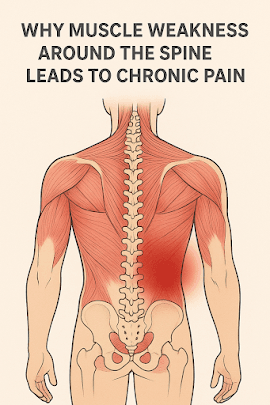
Chronic back pain is not always caused by a spine problem alone — often, the real issue is weak muscles surrounding the spine. These muscles play a major role in supporting your posture, stabilizing your movements, and protecting the spine from stress. When they become weak, the spine is forced to take extra pressure, leading to ongoing discomfort and pain.
1. The Role of Muscles in Spine Support
Your spine is supported by a strong network of muscles, including:
Core muscles
Back extensor muscles
Hip and pelvic stabilizers
When these muscles work properly, they keep the spine aligned and reduce the load on the spinal discs and joints. But if they become weak, the spine loses its natural support.
2. What Happens When Spine-Supporting Muscles Weaken?
a. Increased Pressure on Spinal Discs
Weak muscles cannot hold the spine in correct posture. This increases pressure on discs, which may lead to disc bulging, herniation, or degeneration.
b. Poor Posture
Muscle weakness often leads to slouching or hunching. Over time, this incorrect posture strains the spine and causes chronic pain in the neck, upper back, and lower back.
c. Reduced Stability
Stability muscles around the spine act like shock absorbers. When they weaken, even small movements become stressful for the spine, leading to stiffness and pain.
d. Muscle Imbalance
Sometimes certain muscles become tight while others are weak. This imbalance pulls the spine out of alignment, causing ongoing discomfort.
3. Common Causes of Muscle Weakness Near the Spine
Sedentary lifestyle / too much sitting
Lack of exercise
Poor posture habits
Obesity
Previous spine injury or surgery
Age-related muscle loss (sarcopenia)
Even everyday habits like sitting with a rounded back or bending incorrectly can gradually weaken the muscles supporting the spine.
4. Signs Your Spine Muscles Are Weak
Frequent back pain or stiffness
Poor balance
Fatigue while standing or walking
Difficulty lifting objects
Slouching posture
Pain after long sitting or driving
If these symptoms are ignored, they often lead to chronic spine pain.
5. How to Strengthen the Muscles and Reduce Pain
a. Core Strengthening Exercises
Planks, bridges, and abdominal tightening exercises support your lower back.
b. Back Strengthening
Superman exercise, back extensions, or light weight training helps build strong back extensor muscles.
c. Hip and Glute Strengthening
Strong hips reduce pressure on the lower spine.
d. Posture Correction
Practicing proper sitting, standing, and lifting techniques helps reduce unnecessary strain.
e. Physiotherapy
A physiotherapist can design a personalized muscle-strengthening program.
f. Staying Active
Simple activities like walking, swimming, or yoga help maintain spine support muscles.
6. When to See a Spine Specialist
You should consult a doctor or spine specialist if:
Pain lasts more than 3–4 weeks
Pain radiates to legs or arms
Numbness or tingling occurs
Pain worsens despite exercise
Early evaluation prevents serious spine problems.
Recent Comments