
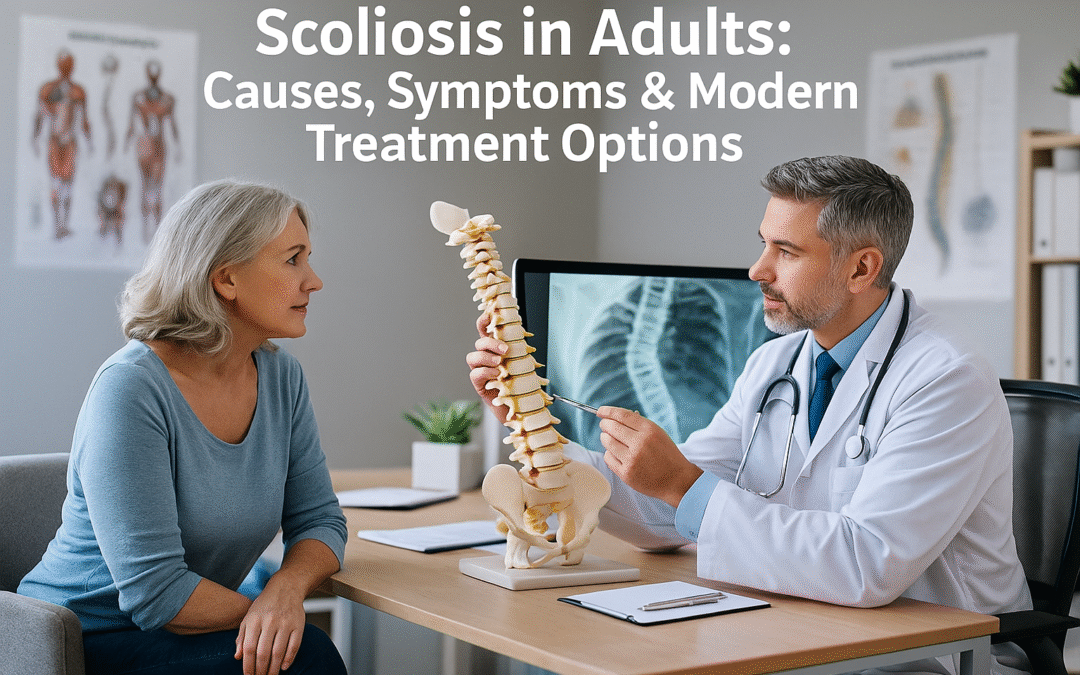
Scoliosis in adults is a spinal condition where the spine curves abnormally, often leading to pain, stiffness, and functional limitations. Early evaluation helps prevent progression and improves long-term spine health.
What Is Adult Scoliosis?
Adult scoliosis is defined as a sideways curvature that appears either from childhood progression or develops due to degeneration. The condition may gradually worsen with age and significantly affect daily activities.
Common Causes of Adult Scoliosis
Understanding what leads to spinal curvature helps identify the right treatment approach.
Degenerative scoliosis: Age-related disc wear, arthritis, and joint degeneration.
Untreated adolescent scoliosis: Mild curves continuing into adulthood.
Post-traumatic scoliosis: Spinal injury leading to imbalance.
Neuromuscular causes: Weak muscles affecting spinal alignment.
Osteoporosis-related deformity: Vertebral compression fractures altering curve stability.
Major Symptoms of Adult Scoliosis
Adult scoliosis presents differently than in children, often with more pain-driven symptoms.
Persistent back pain or neck pain
Visible uneven shoulders or pelvis
Leg pain due to nerve compression
Reduced flexibility or spinal stiffness
Fatigue while standing or walking
Difficulty maintaining posture for long periods
Recognizing symptoms early ensures better outcomes.
How Is Adult Scoliosis Diagnosed?
Diagnosis includes a complete clinical examination, spinal X-rays, MRI for nerve issues, and posture assessment. These tools determine curve severity and help tailor a patient-specific treatment plan.
Modern Treatment Options for Adult Scoliosis
Today’s medical advancements offer effective solutions for both mild and severe curves.
1. Non-Surgical Treatments
Physiotherapy for strengthening back muscles
Posture correction exercises
Anti-inflammatory medications
Bracing in select cases for pain relief
Injections to relieve nerve irritation
Lifestyle modifications including weight control and ergonomics
2. Surgical Treatments
Surgery is recommended when curves progress or cause neurological problems.
Minimally invasive spine surgery to stabilize the curve
Spinal fusion for severe deformities
Decompression procedures to relieve nerve pressure
Advanced navigation & robotic-assisted surgery for precision
For expert evaluation and advanced treatment options, consult our Dr. Sreenath Rao Jakinapally – Best Spine Surgeon in Hyderabad.
Conclusion
Adult scoliosis can significantly impact mobility and quality of life, but timely diagnosis and modern treatment help restore spinal stability and reduce daily discomfort effectively.
Comprehensive care, guided physiotherapy, and advanced surgical innovations enable long-term relief and improved function for patients with progressive spinal curvature.
Recent Comments